
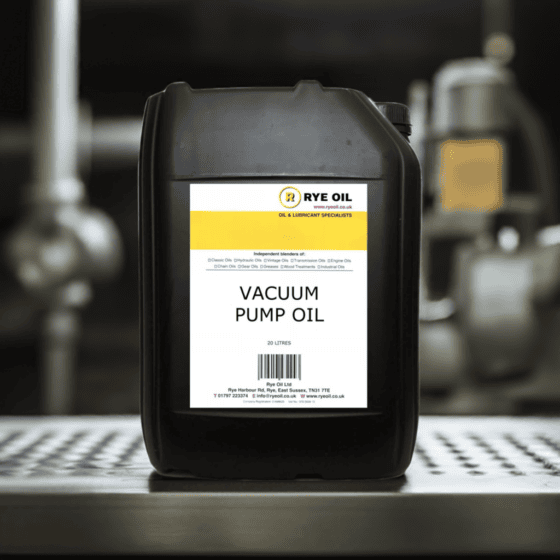
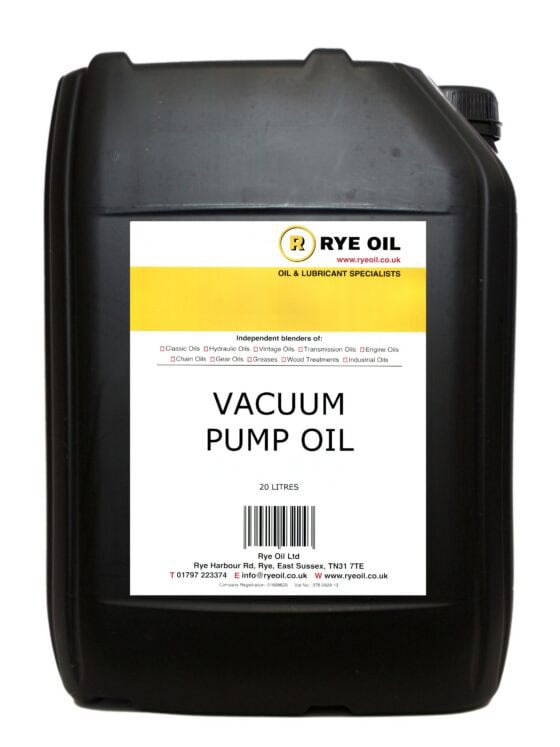
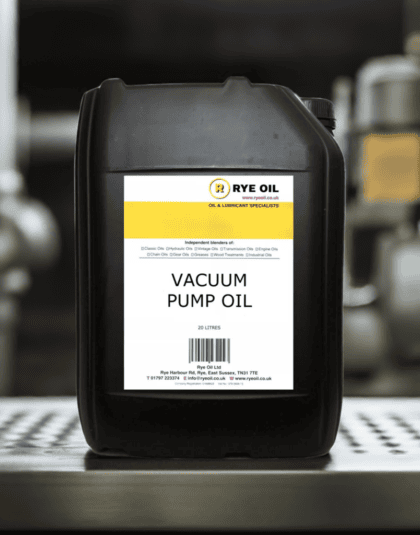


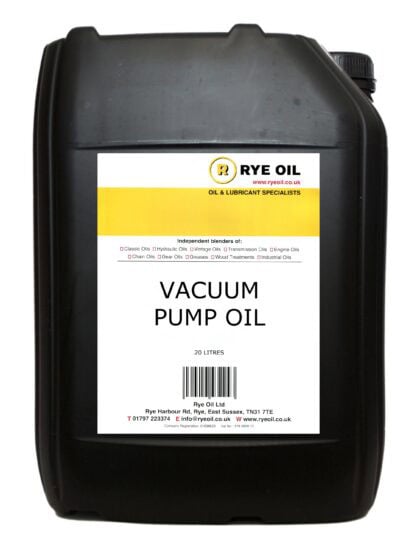
Vacuum Pump Oil
Price range: £69.34 through £648.00
Rye Oil Ltd’s Vacuum pump oil has a lower moisture content than other oils, thanks to our special packaging and handling procedures
- Description
- Additional information
- Reviews (0)
Description
Vacuum pump oil suitable for all machines requiring an ISO 68.
Rye Oil Ltd’s Vacuum pump oil has a lower moisture content than other fluids, thanks to our special packaging and handling procedures. Moisture degrades the oil’s purity, thinning it and reducing the pump’s ability to reach a deep vacuum.
- 1. Rapid water separation ensuring that the oil does not emulsify with moisture or condensation.
- 2. Excellent filter-ability ensuring solid contaminants are easily removed from the oil , therefore promoting long pump life and reliability.
- 3. Low volatility that prevents oil constituents evaporating away during periods of high temperature operation.
- 4. Low pour point provides protection for the equipment when starting up and operating at temperatures below 0 oC.
- 5. High viscosity index of vacuum pump oil maintains the oil film at high temperatures.
- 6. The base fluid has been specially chosen to produce a long life product free of oxidation and sludging tendencies.
Need a dispensing lid that fits our 20l cans? We have you covered – Click here
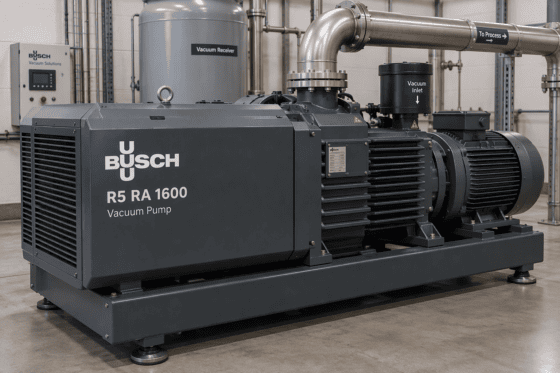
Most commonly used in milking machines, but is used in all vacuum pumps requiring an ISO 68.
Common uses for vacuum pump oil:
Vacuum Pumps In Industry & Manufacturing
-
Material Handling & Holding. Vacuum suction cups are used on automated assembly lines to lift, hold, and move delicate or heavy items (e.g., glass sheets, cardboard boxes, semiconductor wafers, and automotive body panels).
-
Thermoforming & Molding. Pulls heated plastic sheets tightly against molds to create shaped products like packaging trays, tubs, and automotive interior panels.
-
Degassing & Impregnation. Removes trapped air bubbles from liquids like resins, epoxies, silicone, and molten metals before they set to prevent structural flaws.
-
Vacuum Coating. Used in physical vapor deposition (PVD) to coat materials with thin films (e.g., anti-reflective coatings on lenses or decorative metallic finishes on plastics).
2. Food & Beverage Processing
-
Vacuum Packaging. Evacuates oxygen from food packaging (meat, cheese, coffee) to prevent bacterial growth and significantly extend shelf life.
-
Freeze-Drying (Lyophilization). Lowers pressure to allow frozen water in food (such as instant coffee or fruit) to sublime directly from ice to vapor without passing through a liquid phase.
-
Vacuum Distillation & Evaporation. Lowers the boiling point of liquids, allowing water or solvents to evaporate at lower temperatures without burning delicate ingredients (e.g., concentrating juice or extract production).
3.Vacuum Pumps – Medical, Pharmaceutical & Laboratory
-
Medical Suction. Powers surgical suction devices in operating rooms, dentistry, and emergency care to clear bodily fluids, blood, and airways.
-
Laboratory Filtration. Speeds up liquid filtration by drawing fluids through filters under negative pressure.
-
Chemical Synthesis. Evacuates rotary evaporators and vacuum ovens to dry samples or recover solvents safely at lower temperatures.
-
Analytical Instrumentation. Creates the necessary vacuum environment inside mass spectrometers and electron microscopes so particle beams can travel without colliding with air molecules.
4.Vacuum Pump -HVAC & Refrigeration
-
System Evacuation. Prior to filling air conditioning units or refrigerators with refrigerant, a vacuum pump removes all ambient air and moisture from the lines. Trapped moisture can freeze, block flow, or form acids that destroy compressors.
5.Vacuum Pump – Electronics & Semiconductor Manufacturing
-
Microchip Fabrication. Clean-room vacuum pumps are critical for chemical vapor deposition (CVD), etching, and ion implantation during silicon wafer manufacturing.
-
Display Production. Used in the manufacture of OLED and LCD screens to ensure thin-film layers are deposited in ultra-clean, air-free conditions.
6. Automotive & Aerospace
-
Brake Boosters. Many diesel and turbocharged gasoline engines use vacuum pumps to provide power assistance to the braking system.
-
Composite Layering. Vacuum bagging pulls air out of carbon fiber or fiberglass layers to ensure resin fully saturates the composite without air pockets.
If you need anymore information please contact us here
Additional information
| SIze | 5ltrs, 20ltrs, 205ltrs |
|---|
Be the first to review “Vacuum Pump Oil”
You must be logged in to post a review.






Reviews
There are no reviews yet.